
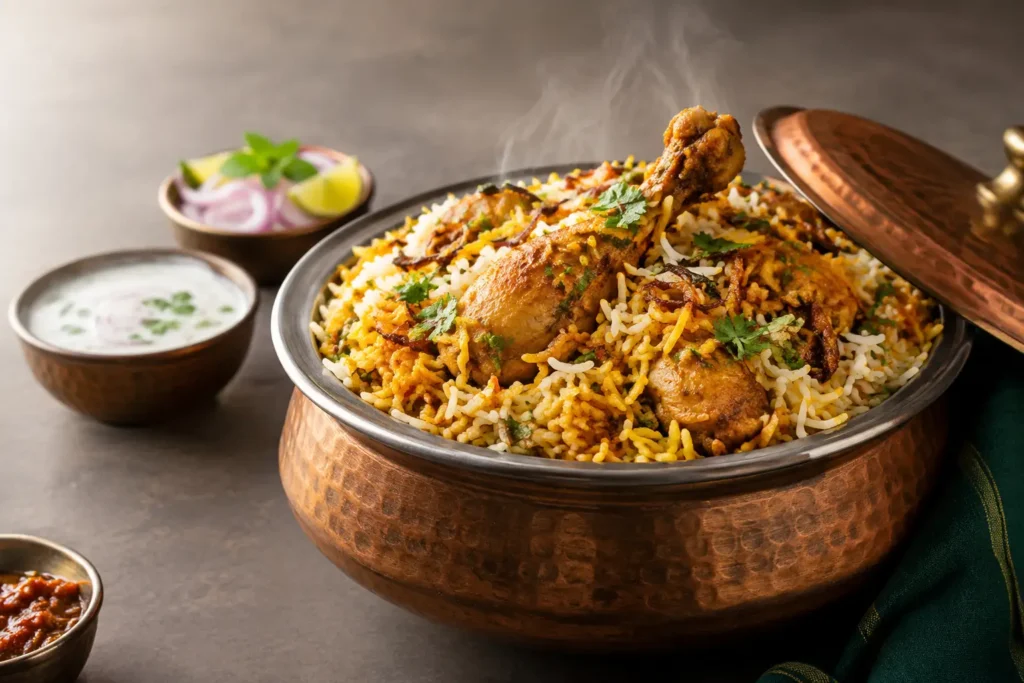
A proper Hyderabadi biryani arrives with its own announcement: the perfume of saffron, spices, caramelised onions and long-grain basmati rising as the lid is lifted. Then comes the important part – not just rice piled over curry, but separate, fragrant grains carrying the flavour of slow-cooked meat, herbs and masala from the pot beneath.
For Hyderabad, biryani is a point of pride. For a family table, it is a generous centrepiece. For a weeknight order in Watford, it is the dish that can turn an ordinary evening into a proper meal. Its appeal lies in that balance: it feels celebratory, yet it is satisfying enough to enjoy with nothing more complicated than raita, salan and a good appetite.
What makes Hyderabadi biryani different?
Biryani is cooked in many regions of the Indian subcontinent, and every style has its own character. Some are lighter, some sweeter, some rely on particular local spices or cooking fats. Hyderabadi biryani is known for depth, fragrance and the dum method – a slow finish in a sealed pot that brings all the layers together without turning the rice heavy.
Its history reflects Hyderabad itself: a royal city where Deccani cooking met Mughlai influence. The result is food with richness and confidence, but also careful balance. Warm spices should support the meat rather than overwhelm it. Fresh mint and coriander should lift the aroma. Fried onions add sweetness and texture, while yoghurt helps tenderise and carries the masala into every layer.
The rice matters just as much as the meat. Good basmati must stay long, fluffy and distinct. If the grains break or become wet with gravy, the biryani loses the contrast that makes it special. A well-made portion gives you spice, savoury meat, floral rice, herbs and occasional pockets of saffron in every serving – not all in one mouthful, but in harmony across the plate.
Dum is not just a cooking word
Dum means slow cooking in a tightly covered vessel. The lid is sealed so that steam stays inside, gently finishing the rice and allowing the aromas to circulate through the layers. This is why the final result tastes rounded rather than simply spicy.
Timing is crucial. Too little dum and the flavours remain separate. Too much heat and the rice can dry out or catch at the bottom. The best biryani has a little variation within the pot: pale, fragrant rice on top; deeper colour where saffron and masala meet; tender meat below; and a prized, lightly crisp layer at the base for those who know to look for it.
The ingredients behind the fragrance
There is no single household formula for Hyderabadi biryani, which is part of its charm. Recipes differ in their spice balance, the cut of meat, the amount of chilli and whether the rice and meat begin cooking together or separately. Yet the essential building blocks remain recognisable.
Basmati rice provides the structure. Bone-in chicken or lamb brings savoury richness and, in the case of lamb, benefits from the patient cooking that dum biryani demands. Yoghurt, ginger, garlic, green chillies, coriander, mint and fried onions form the flavour base. Whole spices such as cardamom, cloves, cinnamon and bay leaf perfume the rice without making it taste aggressively spiced.
Saffron milk may be used for colour and aroma, though the point is restraint rather than a bright yellow finish. The same is true of rose water or kewra in some recipes: a small amount can make the biryani beautifully aromatic; too much distracts from the food. This is a dish built on judgement, not a shortcut sauce.
For vegetarian diners, a vegetable biryani deserves the same care. Vegetables need to retain their shape and flavour rather than disappear into the masala. Paneer, cauliflower, carrots, peas, beans and potatoes can all work well, especially when the rice is treated with the same respect as in a meat biryani. A vegetarian option should feel like a complete Hyderabadi meal, not an afterthought.
Chicken, lamb or vegetable: choosing your biryani
Chicken biryani is often the easiest place to start. It is aromatic, satisfying and works particularly well for a relaxed family dinner or a first order for someone new to Hyderabadi food. The chicken takes on the masala quickly, while the rice remains the star of the plate.
Lamb biryani offers a fuller, more luxurious flavour. Properly cooked lamb should be tender enough to pull from the bone, with its richness absorbed into the spices and rice. It is an excellent choice when the meal is meant to linger – a weekend gathering, a celebration, or an order shared around the table.
Vegetable biryani brings a lighter but still richly spiced alternative. It pairs beautifully with cooling raita and can be especially useful for mixed groups, where guests have different preferences. When ordering for several people, a combination of chicken, lamb and vegetable biryani keeps the table generous and gives everyone a dish they can enjoy.
How to serve Hyderabadi biryani properly
Biryani does not need a crowded plate. In fact, too many side dishes can hide the detail in the rice. A cool raita is the natural companion, bringing yoghurt, cucumber or onions to soften the warmth of the spices. Mirchi ka salan, with its nutty sesame and peanut gravy, adds a deeper Hyderabad-style contrast for those who enjoy more complexity.
A simple onion salad with lemon can cut through the richness, while a crisp starter such as Chicken 65 makes a lively beginning to a sharing meal. If you are feeding a larger group, tandoori dishes, naans and a curry can broaden the spread, but let the biryani remain at the centre.
The finishing touch can be sweet rather than heavy. Double-ka-Meetha is a classic Hyderabadi choice for diners who want to continue the regional feast, while a chilled lassi provides a refreshing close after a warmly spiced meal.
A note on spice and heat
Fragrant does not always mean fiery. Hyderabadi food uses chillies and spices with confidence, but biryani should be aromatic first and hot second. Heat levels can vary according to the kitchen and recipe, so it is worth choosing carefully when ordering for children, guests unused to chilli, or a workplace lunch.
If you enjoy extra warmth, pair your biryani with a more assertive side rather than overwhelming the rice itself. This keeps the dish balanced and lets each person at the table control their own level of heat.
Biryani for weeknights, gatherings and catering
One reason biryani travels so well is that it is already a complete meal. The layers protect the rice, the flavours settle beautifully, and portions are easy to share. That makes it a strong choice for delivery and takeaway when you want something more memorable than a routine dinner.
For family occasions and celebrations, biryani has a natural sense of occasion without requiring hours of preparation at home. Add starters for grazing, curries for variety and desserts for a full feast. For office lunches, parties and larger events, it offers dependable portion value and broad appeal, especially when chicken, lamb and vegetarian choices are ordered together.
At Biryani Bytes, that regional focus is reflected beyond the biryani pot. Weekend favourites such as Haleem, Marag, Chicken Mandi and Lamb Mandi offer regular diners a reason to explore more of Hyderabad and its surrounding culinary traditions. They also show why a specialist menu matters: regional food is at its best when it is treated as more than a token addition.
The pleasure is in the layers
The best way to eat biryani is simply to serve it gently, mixing a little from top and bottom so that the aromatic rice meets the masala-rich layer beneath. Add raita if you like, take your time, and save a spoonful of the deeply flavoured rice for the end. A good Hyderabadi biryani rewards that small bit of patience with a meal worth gathering around.