
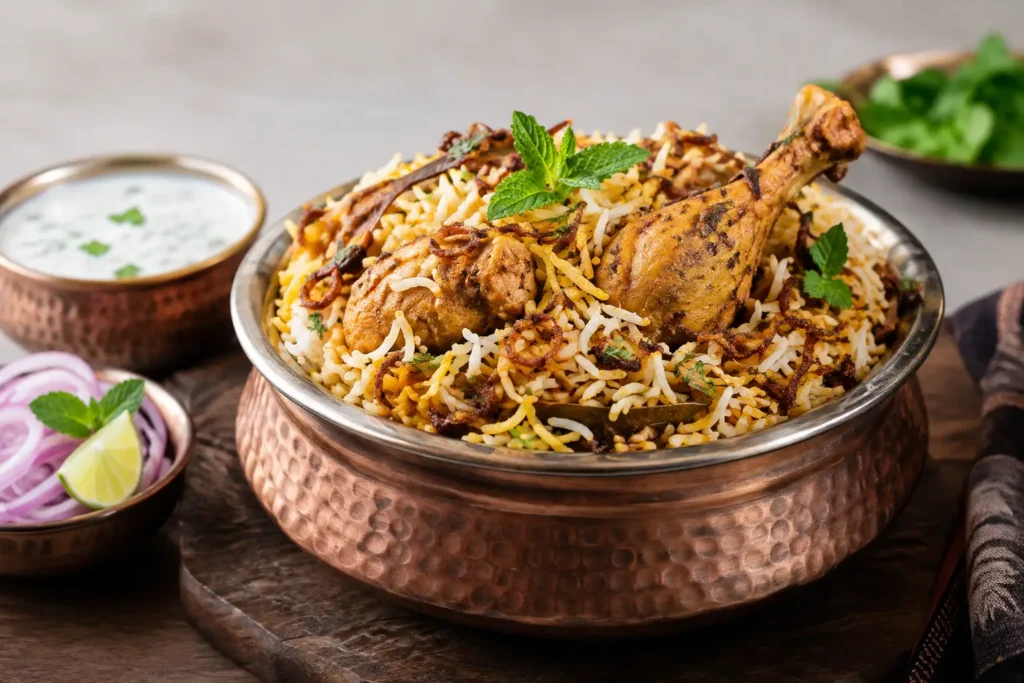
A sealed pot, gently cooked over a low flame, is where the character of a true biryani is made. So, what is Hyderabadi dum biryani? It is Hyderabad’s celebrated layered rice dish, where aromatic basmati rice, richly marinated meat or vegetables, herbs, whole spices and saffron are cooked together on dum – slow steam – until every grain carries deep, fragrant flavour.
It is not simply rice served with curry, and it should never feel like an afterthought on an Indian menu. Hyderabadi dum biryani is a complete dish with its own method, balance and royal heritage. The reward for the patience it demands is unmistakable: tender meat, beautifully separate rice, the brightness of mint and coriander, warming spices and that treasured aroma released when the lid is lifted.
What Makes Hyderabadi Dum Biryani Different?
Hyderabadi biryani comes from a city whose food reflects a meeting of culinary traditions. The kitchens of the Nizams brought together Persian-influenced cooking with the rich ingredients, spices and techniques of the Deccan. Over time, biryani became one of Hyderabad’s proudest signatures – generous enough for a feast, yet carefully composed down to the final grain of rice.
The word dum refers to the cooking technique. A heavy pot is sealed so that steam cannot easily escape, then placed over a low heat. As the ingredients cook, the aromas stay inside the vessel. The rice absorbs the juices from the meat, the spices mellow and settle, and the layers come together without being stirred into one uniform mixture.
That is why a good Hyderabadi dum biryani has contrast. You may find white grains of basmati alongside saffron-tinted rice, a tender piece of chicken or lamb beneath a scatter of fried onions, and fresh herbs cutting through the richness. It is fragrant rather than aggressively hot, although the level of chilli can vary. Its flavour should build with each spoonful.
The Dum Method: Slow Cooking With Purpose
Dum cooking sounds simple, but it relies on timing. Rice needs to be cooked only partly before it enters the pot, otherwise it can turn soft and heavy during the final steam. Meat must be marinated well enough to remain succulent and flavourful through the long, gentle finish. The seal has to hold, and the heat has to be controlled.
Traditionally, dough is used to seal the edge between pot and lid. This creates a snug enclosure that traps steam and scent. In professional kitchens, a tightly fitted lid and careful preparation achieve the same essential aim: no rushing, no drying out and no loss of the aromas that make the dish so memorable.
There are two broad approaches to Hyderabadi biryani. Kacchi biryani begins with raw, marinated meat layered with partially cooked rice, then cooked together on dum. It requires real confidence because the meat and rice must reach perfection at the same time. Pakki biryani uses meat that has already been cooked before it is layered with rice and finished on dum. Both can be excellent, but each gives a slightly different result.
For diners, the important thing is the outcome. The meat should be tender, never dry. The rice should remain long-grained and light, not clumped or greasy. And the spice should be present throughout rather than sitting only on the surface.
The Ingredients Behind the Aroma
A Hyderabadi dum biryani is built around basmati rice, chosen for its length, aroma and ability to stay distinct after cooking. The rice is often perfumed with whole spices such as cardamom, cloves, cinnamon and bay leaf. Saffron, soaked in warm milk or water, gives certain layers their golden colour and delicate floral note.
The marinade is just as important. Chicken or lamb is commonly combined with yoghurt, ginger, garlic, green chillies, spices and herbs. Yoghurt brings gentle tang and helps tenderise the meat, while fried onions add sweetness and depth. Mint and coriander are not mere decoration: they bring freshness to a dish with plenty of richness.
You may also notice lemon, kewra water or rose water in some recipes, along with ghee for a fuller finish. These ingredients need a careful hand. Too much perfume can overpower the rice; too much ghee can make the dish feel heavy. The best biryani tastes layered, not crowded.
Vegetarian dum biryani follows the same logic. Seasonal vegetables, paneer or soya may take the place of meat, but the focus remains on fragrant rice, thoughtful seasoning and the final dum. A vegetarian option should have the same sense of occasion, not feel like a lesser version of the main dish.
Chicken, Lamb or Vegetarian: Which Should You Choose?
Chicken dum biryani is often the most approachable choice. It is aromatic, satisfying and well suited to a family dinner or a relaxed takeaway night. Chicken readily takes on the marinade, and its lighter character lets the saffron, herbs and fried onions shine.
Lamb dum biryani has a deeper, more luxurious flavour. When cooked properly, the lamb becomes soft enough to pull apart with a spoon, while its richness gives the rice an especially savoury finish. It is a brilliant choice for a celebratory meal, though it naturally feels fuller and more substantial than chicken.
Vegetarian dum biryani offers plenty of flavour when the vegetables are properly seasoned and the rice is given the same care. It works particularly well alongside a cooling raita and a vegetable side, creating a generous meal without relying on meat.
There is no single right choice. It depends on who is at the table, how hungry everyone is and what else you plan to order. For a larger group, choosing more than one biryani makes sharing part of the experience.
How Hyderabadi Biryani Should Be Served
Biryani is satisfying on its own, but a few well-chosen accompaniments bring balance. Raita is a classic partner, with cool yoghurt helping to soften the warmth of spices and chilli. Salan, a tangy and gently spicy gravy often made with peanuts, sesame and tamarind, adds another distinctly Hyderabadi layer. A simple onion salad with lemon also provides welcome sharpness.
Try not to drown the biryani in curry. The rice has already been cooked with the juices and aromas of its own ingredients, so it deserves to be tasted first. A spoonful of raita or salan alongside it is usually enough to complement rather than conceal the dum flavour.
For a proper spread, begin with something lively such as Chicken 65 or a tandoori starter, then let biryani take centre stage. Rich specialities such as Haleem or Marag can make a memorable weekend feast, particularly when friends and family are sharing. Finish with something sweet and traditional, such as Double-ka-Meetha, for a meal that feels generous from first course to last.
Why It Is More Than a Takeaway Favourite
A well-made Hyderabadi dum biryani suits many occasions because it arrives as a complete, generous meal. It works for a quiet evening at home, but it also holds its own at birthdays, office lunches and family gatherings where one dish needs to please different appetites.
It is also practical for sharing. The pot or tray can be placed in the middle of the table, allowing everyone to serve themselves and discover the layers as they go. That communal quality is part of its appeal. Biryani invites conversation, second helpings and the inevitable debate over who found the best piece of meat.
At Biryani Bytes, the focus is on bringing this royal Hyderabadi tradition to Watford with the warmth and generosity it deserves. Whether you choose chicken, lamb or a vegetarian option, give the first spoonful a moment before adding anything else. The fragrance rising from the rice is the whole point of dum cooking – and the best place to begin your meal.
Pingback: Vegetarian Biryani Delivery Watford Made Special - biryanibytes.co.uk
Pingback: Indian Food Bulk Orders in Watford - biryanibytes.co.uk
Pingback: Authentic Hyderabadi Veg Dum Biryani Recipe - biryanibytes.co.uk
Pingback: Indian Corporate Catering in Watford That Works - biryanibytes.co.uk
Pingback: Halal Indian Restaurant Watford for Biryani Feasts - biryanibytes.co.uk
Pingback: Mandi Biryani Comparison: Which Rice Dish Suits Your Table? - biryanibytes.co.uk