
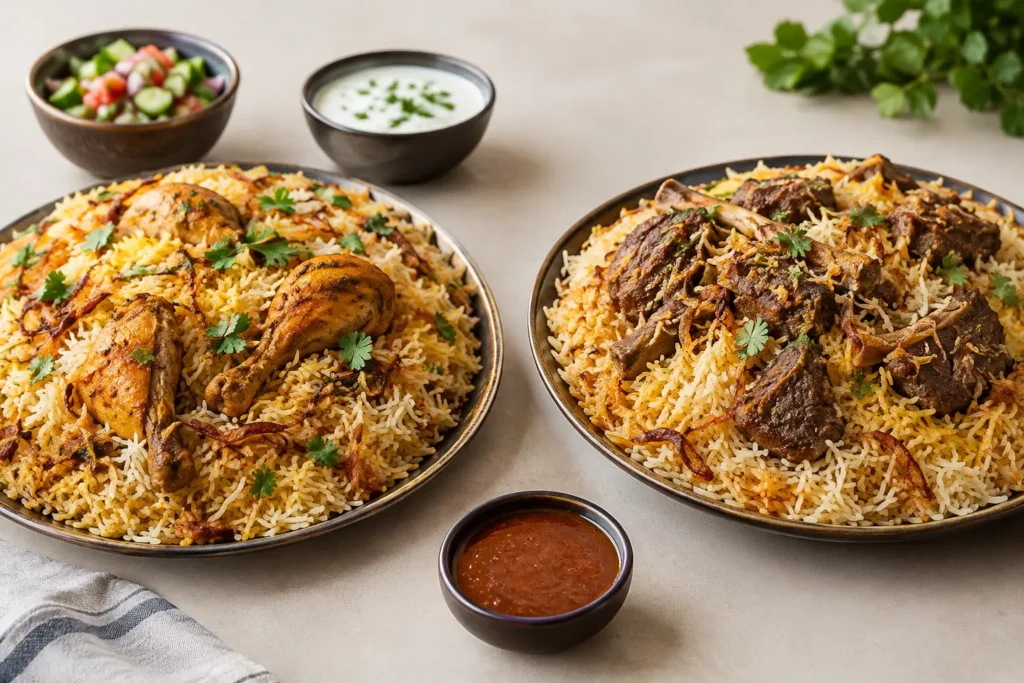
A Mandi biryani comparison is useful because these two celebrated rice dishes can look similar from across the table: fragrant long-grain rice, tender meat and a generous sharing portion. Yet the experience is quite different. One leans towards gently smoked, spice-scented comfort; the other is defined by layered aromatics, dum cooking and the royal richness of Hyderabad.
For diners in Watford choosing a special weekend meal, a family order or catering for a gathering, the best choice is not about declaring one dish better. It is about matching the flavour, texture and occasion to the people around your table.
Mandi and biryani: two distinct traditions
Mandi comes from the Arabian Peninsula, particularly the Yemeni region of Hadramawt. Traditionally, meat is cooked with aromatic rice in an underground oven or pit, allowing the rice to take on a delicate smokiness. Chicken or lamb is the usual centrepiece, served over a broad bed of rice that is designed for sharing.
Biryani belongs to the Indian subcontinent, with many regional styles shaped by local ingredients and royal kitchens. Hyderabadi Dum Biryani is especially known for its balance of fragrant basmati rice, marinated meat, herbs and whole spices. Its name tells you much about the method: dum means slow cooking in a sealed pot, where steam brings the layers together without making the rice heavy.
Both dishes are generous, celebratory and deeply satisfying. Calling Mandi a type of biryani is understandable in everyday conversation, especially when both appear in the same feast. Strictly speaking, however, they are different dishes with their own cooking traditions.
Mandi biryani comparison: flavour comes first
The clearest difference is the spice character. Mandi is aromatic but restrained. Its flavours often centre on cardamom, cloves, cinnamon, black pepper and dried lime, with the savoury juices of the chicken or lamb absorbed by the rice. There may be a gentle heat, but the aim is usually perfume and depth rather than a pronounced chilli kick. A touch of smoke is part of what makes a well-made Mandi memorable.
Hyderabadi biryani has a fuller, more layered profile. The meat is typically marinated with yoghurt, spices and often herbs before cooking, while saffron or coloured rice, fried onions, mint, coriander and whole spices add their own notes. The result should not be uniformly spicy. A good Dum Biryani has pockets of flavour: sweet fried onion, bright herbs, warming masala and tender meat juices released into the rice.
If you prefer clean, gently seasoned rice that lets the meat take the lead, Mandi may suit you. If you enjoy a more complex masala aroma and a richer, more expressive plate, biryani is likely to be your favourite. Heat can vary between kitchens in both dishes, so customers who prefer mild food should always ask how a particular preparation is seasoned.
The role of smoke and spice
Mandi’s smoky note should be subtle, never harsh. It is there to give the rice a roasted, fireside character and to echo the traditional cooking method. This makes it particularly appealing to diners who enjoy grilled and charcoal-led flavours.
In biryani, the defining aroma is less about smoke and more about steam, spice and herbs. The sealed dum pot keeps those scents inside as the rice and meat cook together. Opening the lid is part of the pleasure: first comes the fragrance, then the contrast between the rice grains, masala and meat.
Rice texture and cooking method
Rice is not simply a side in either dish. It carries the dish.
Mandi rice is usually loose, light and savoury, often tinted a warm golden colour. It is cooked in stock from the meat, so each spoonful has flavour even without extra gravy. The grains should be separate and fluffy, making Mandi easy to serve on a large platter and easy to enjoy with salad, sauce or a little yoghurt.
Biryani rice should also remain separate, but it is intentionally layered. Some grains may be white, while others are scented with saffron, spices or meat juices. The texture is often more varied because the rice is finished on dum with marinated meat and aromatics. You may find a particularly flavourful section near the base of the pot, where the masala has settled into the rice.
That distinction matters when ordering for a group. Mandi offers a more even, shared-rice experience, with the meat placed proudly on top. Biryani rewards mixing a little from different layers before serving, so every plate includes rice, masala, herbs and meat.
Chicken, lamb and the matter of tenderness
Chicken Mandi is a popular introduction to the dish. Its lighter meat takes on the fragrance of the rice well and makes a generous but approachable meal for families. Lamb Mandi feels more celebratory, with deeper savoury flavour and meat that benefits from patient cooking. When the lamb is cooked properly, it should be tender enough to pull away easily while still tasting richly of the meat itself.
Chicken biryani is lively, fragrant and ideal when you want a full meal with bold Hyderabadi character. Lamb or mutton biryani offers a more intense flavour, particularly when the meat has had time to soften slowly with its marinade. Neither is automatically the more indulgent option. That depends on the cut of meat, portion size and the accompaniments chosen alongside it.
Vegetarian diners should know that traditional Mandi is most closely associated with chicken or lamb, whereas vegetable biryani is an established and satisfying choice in its own right. A well-made vegetarian biryani should have properly seasoned vegetables and rice, rather than treating the vegetables as an afterthought.
What to serve with each dish
Mandi is often at its best with a fresh tomato-based sauce, cooling yoghurt and a crisp salad. These sides bring brightness to the mild, aromatic rice and cut through the richness of lamb. A simple side is usually enough because the platter itself is the main event.
Biryani pairs beautifully with raita, mirchi ka salan or a curry with enough gravy to complement the rice without drowning it. The chilli and peanut-sesame character of salan is a classic Hyderabadi match, while raita offers welcome coolness beside a more spice-forward biryani. For a larger table, starters such as Chicken 65 or tandoori dishes can turn biryani into a proper feast.
There is a practical trade-off here. Mandi tends to need fewer additions and works brilliantly as a centrepiece for sharing. Biryani can stand alone too, but its wider range of traditional accompaniments makes it especially good for diners who enjoy building a fuller Hyderabadi spread.
Which dish fits your occasion?
For a relaxed family meal, chicken Mandi can be a wonderful choice when you want something generous without an intense spice profile. It is easy to share, easy to serve and welcoming to diners who are new to regional Indian and Arabian rice dishes.
For a birthday, weekend gathering or meal where food is meant to start the conversation, lamb Mandi brings theatre to the table. Its platter-style presentation feels communal and celebratory. It is also a strong choice for mixed groups, provided everyone is comfortable with the distinctive aromatic profile.
For a dinner that calls for Hyderabad’s signature flavours, Dum Biryani is difficult to beat. Choose it when you want layers of spice, herb and slow-cooked meat, or when guests already know they love biryani. It is equally at home on a Friday night takeaway order and as part of a catered celebration.
At Biryani Bytes, weekend Mandi specials sit naturally alongside the restaurant’s Hyderabadi biryanis: two proud rice traditions, each worth ordering for its own character. If you are feeding a larger group, consider the balance of the table. Mandi can be the generous shared centrepiece, while biryani and a few starters bring extra variety for guests who enjoy bolder spice.
A better way to choose
Rather than asking whether Mandi or biryani is best, ask what you want the first mouthful to taste like. Choose Mandi for gentle smoke, tender meat and lightly aromatic rice. Choose Dum Biryani for layered masala, herbs, fried onions and the deep comfort of a sealed-pot Hyderabadi classic.
Both belong at a generous table. Order with the people you are feeding in mind, add a cooling side when needed, and leave room for something sweet such as Double-ka-Meetha. The right rice dish is the one that brings everyone back for another serving.